Your cyber program multiplies tools without reducing risk. FortaRisks unifies posture, threats, external exposure, and third parties in one platform that sees, prioritizes, and drives down your score.
Posture, compliance, CTI, external attack surface, third-party risk: every cyber signal in a single engine. One action list ranked by business impact. Quantified proof that risk is going down. And the end of cyber programs you can no longer defend in front of the board.
10 tools, 40 dashboards, and still no clear action plan.
Act !
Most CISOs run their program with a dozen tools that don't speak the same language. The scanner says one thing, the ISO audit says the opposite, nobody knows whether CTI is actually wired to the right assets. The budget grows every year, risk doesn't go down, and nobody can defend it in front of the board.
​
FortaRisks fixes this at the root. We consolidate your signals into one engine, rank them by business impact, and produce the action roadmap that actually drives your score down. You stop paying for what doesn't move the needle.
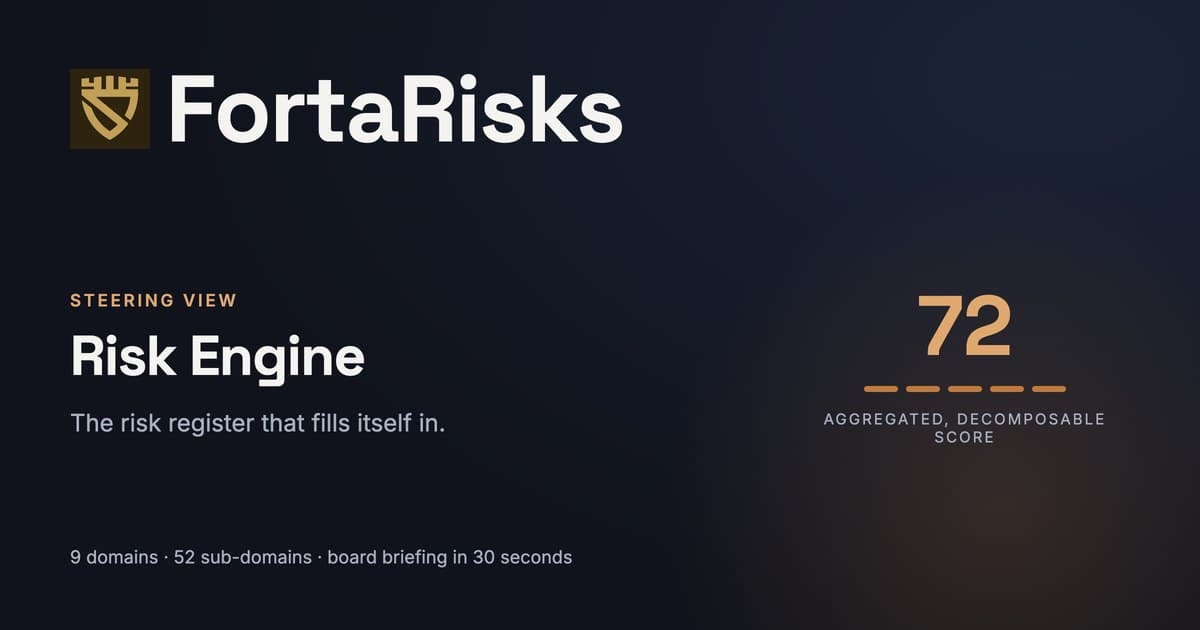
AI Risk Engine. One score, one list of actions.
All your cyber signals converge here. The engine sorts. You act.
The AI Risk Engine takes everything into account: your posture, your compliance controls, the CTI active within your scope, your attack surface, and your third parties. It outputs a single, continuously recalculated score and a precise list of the actions that reduce it most rapidly. No opaque scoring. You know why one risk ranks higher than another, and you have the figures to show the board six months later.
• Multi-source correlated score, continuously recalculated
• Roadmap of actions ranked by actual impact
• Quantifiable evidence of the decrease in risk, month after month
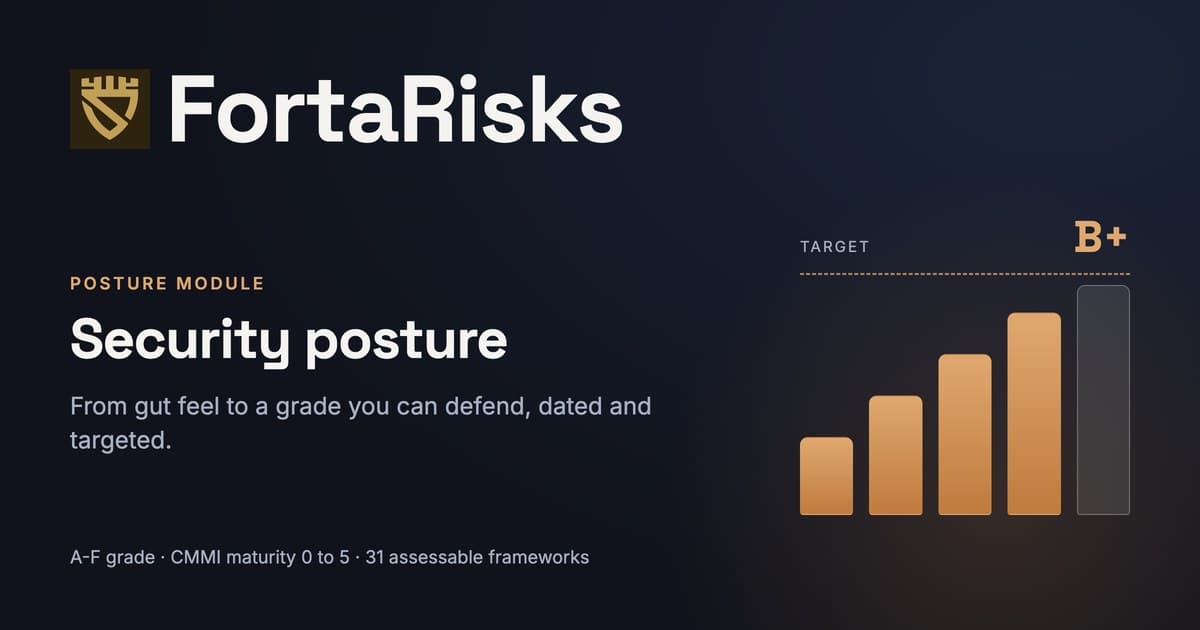
Posture & Compliance. No more gap analysis gathering dust in an inbox.
Your controls, your reference data, your discrepancies. All in one place, always audit-ready.
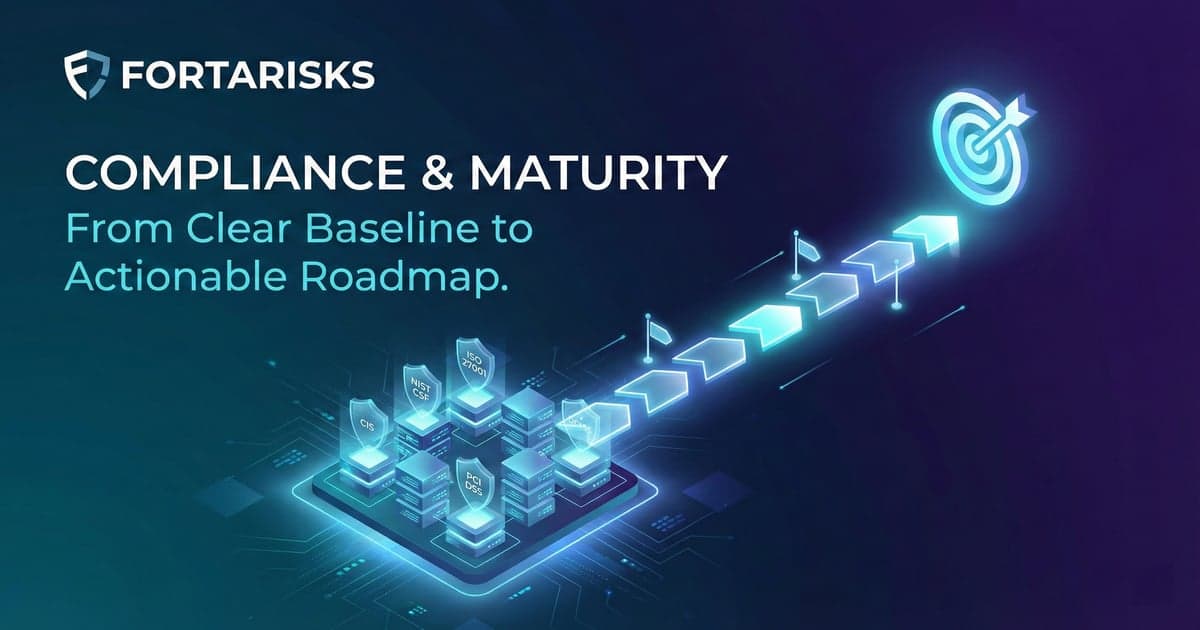
Maturity is assessed control by control, standard by standard. Cross-framework mappings: a valid control counts for ISO 27001, NIST CSF, SOC 2, CIS Controls, OWASP, SWIFT CSCF, SCF, Law 25, and more, depending on your scope. This list is not exhaustive. The gap analysis updates automatically. Evidence is linked to the correct control. When the auditor arrives, you open the platform, show them the baseline, the gaps that have been addressed, and the list of ongoing gaps, dated and quantified. Compliance is no longer a three-month panic cycle before the audit.
• Maturity through control, not just through benchmarks
• Mapping NIST CSF / SOC 2 / CIS / ISO 27001 / OWASP / SWIFT CSCF / SCF / Law 25 and more, this list is not exhaustive
• Action plan and supporting evidence attached to the audit, never lost
CTI & Cyber Threats. The threat that actually concerns you, not background noise.
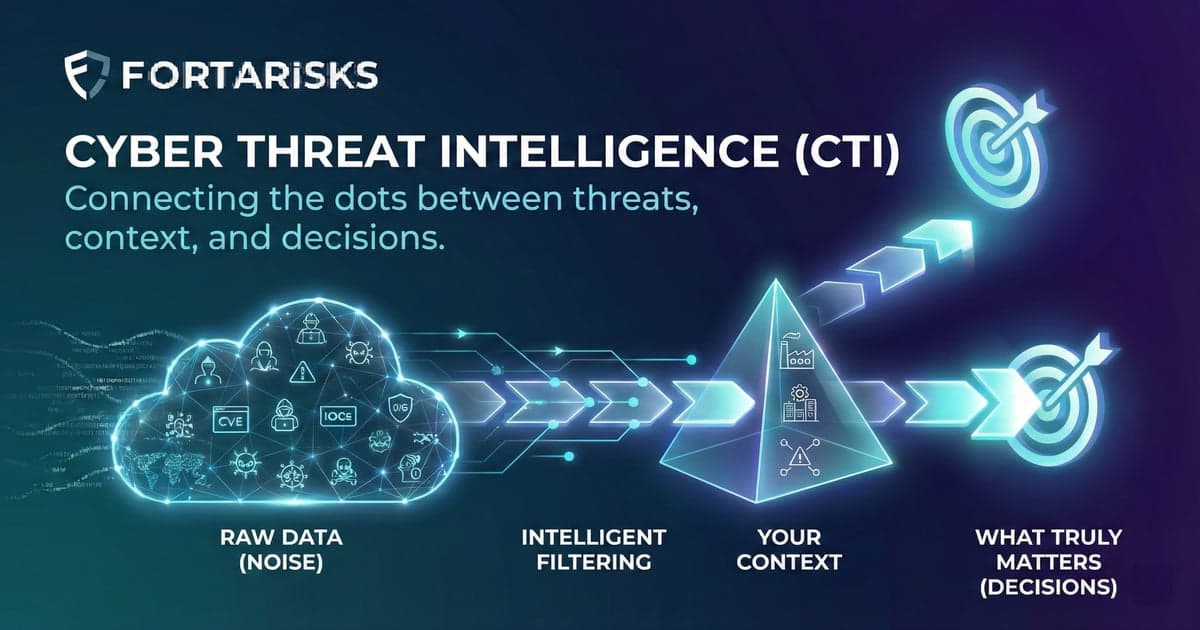
The CTI module does the sorting. You see the active threats on your perimeter, and the actions to take.
Our CTI ingests MISP, STIX/TAXII feeds, dark web monitoring, and industry-specific sources. But the key isn't the quantity of signals. It's the correlation: we cross-reference MITRE ATT&CK TTPs with your technical stack, your existing controls, and your external exposure. The result: a short list of truly relevant alerts for you, with a clear protection status (covered, partial, exposed) and details of the actions to take. The SOC stops overwhelming your teams.
• MISP, STIX/TAXII, dark web, sectoral feeds
• Correlation between MITRE ATT&CK TTPs, and your stack and controls
• State of protection against threat: covered / partially covered / exposed
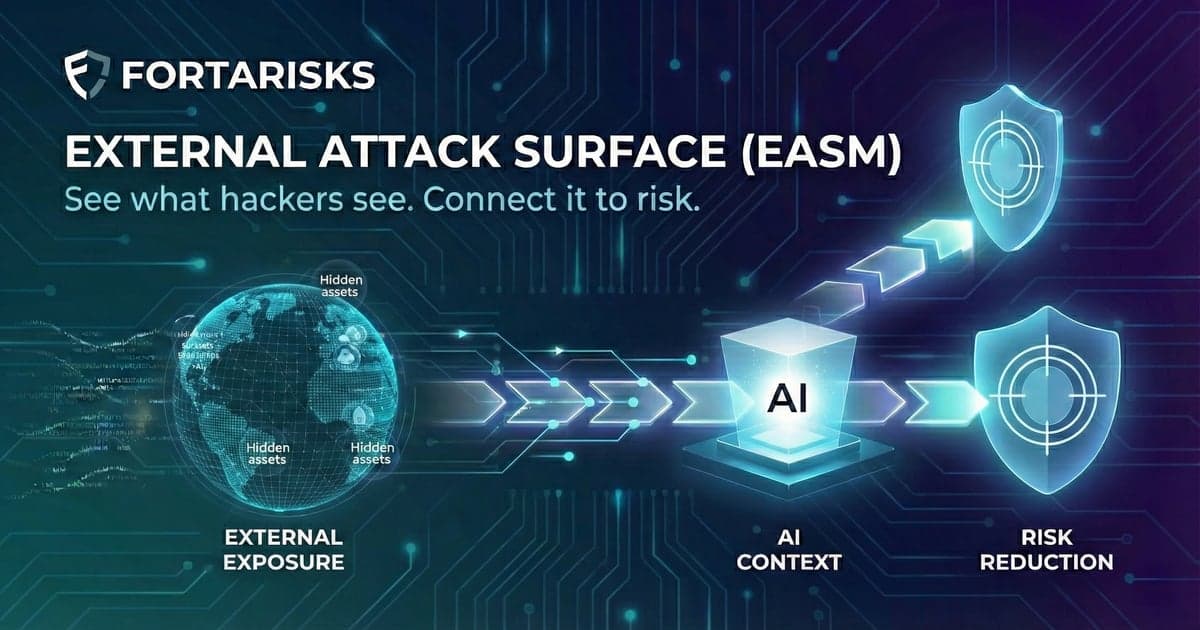
Attack Surface. What the attacker sees, continuously.
Four modules, 100+ controls, native OT/ICS scan. Every finding is cross-referenced with CTI and your posture so you only treat what's exploitable.
​
Email Health. Phishing blocked at the source: SPF, DKIM, DMARC, MX, blacklists.
​
System Health. Your external technical exposures: TLS, HTTP headers, ports, subdomains, CVEs, WAF, misconfigurations.
​
Reputation. Around your brand: typosquatting/cybersquatting, IOCs, malware, leaked credentials.
​
Disclosure. Everything that has leaked outside: exposed databases, public code, social, victimology.
Third-Party Risk. The actual posture of your vendors, not their questionnaire.
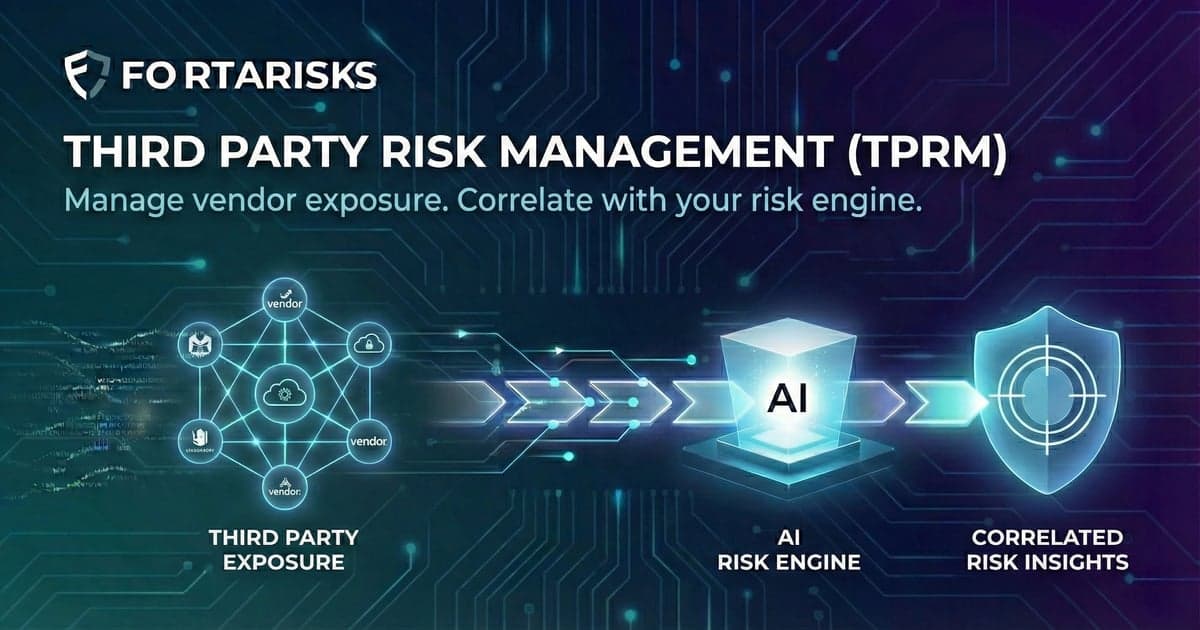
Risk-Based Assessment, Continuous Monitoring, Questionnaire-based, EASM-based. The 4 pillars of a sound TPRM.
A third-party risk management (TPRM) system that only assesses the risk through an annual questionnaire offers no protection. When a third party fails, you'll find out through the press. FortaRisks connects our EASM engine directly to your critical suppliers to measure their actual position, not the one they claim to have. Everything is calibrated to the third party's criticality level and monitored continuously.
• Risk-Based Assessment : effort calibrated to the criticality of the third party
• Continuous Monitoring : ongoing monitoring, not an annual review
• Questionnaire-based : structured and traceable questionnaires
• EASM-based : EASM engine applied to the third party for actual posture
Stop signing cyber budgets that nobody knows how to defend.
Cybersecurity doesn't need more tools. It needs a clear decision every quarter. FortaRisks gives you the unified picture, the order of actions, and the data-driven proof that risk is decreasing. That's all, and that's what changes everything.
FAQs
1/ Which reference systems do you support?
NIST CSF 2.0, ISO 27001, SOC 2, CIS Controls, OWASP, SWIFT CSCF, SCF (Secure Controls Framework), Loi 25 (Quebec), and key industry frameworks. Continuous mapping, without double entry.
2/ How does the AI Risk Engine prioritize?
The engine correlates your posture, controls, active CTI within your perimeter, external attack surface, and third-party risks. Each exposure is weighted by its actual exploitability and business impact, not by a generic technical severity. The resulting roadmap is executable and defensible before a committee.
3/ How is the CTI data updated?
Continuous monitoring. 30 million aggregated and correlated signals constantly, 1,500+ actors tracked with their victim data. We only show you what's relevant to your sector, your location, and your assets.
4/ What is the coverage of the attack surface?
Four additional modules, over 100 continuously evaluated controls, native OT/ICS scan included.
Email Health. SPF, DKIM, DMARC, MX, email blacklists. Objective: to prevent an attacker from spoofing your domains to phish your customers or employees.
System Health. TLS certificates (validity, strength, chain), HTTP security headers, open ports, subdomains exposed to takeover, exposed technologies and their versions, known CVEs, WAF/CDN presence, web application misconfigurations. This is the external audit that your penetration tester no longer performs continuously.
Reputation. Typosquatting and cybersquatting of your brand, domain reputation, correlation with active indicators of compromise (IOCs), malware association, credential leaks on the dark web. You see what's being planned against you, not just what's already succeeded.
Disclosure. Publicly exposed databases, compromised credentials, public source code (GitHub, GitLab), social media exposure, victimology from CTI. If your name appears in a leak, you'll find out here, not through the press.
Particularly suited to industrial environments thanks to native OT/ICS scanning, where IT/OT convergence creates blind spots that generic EASMs do not cover.
5/ How does FortaRisks address third-party risk (TPRM)?
Four complementary pillars. Risk-Based Assessment: effort is calibrated to vendor criticality. Continuous Monitoring: permanent surveillance, not an annual checkpoint. Questionnaire-based: structured, traceable questionnaires. EASM-based: our EASM engine applied to the vendor to measure actual posture, not what they declare.
6/ How do you prove the risk reduction?
The risk score, global and per domain, is computed continuously. You track its evolution before/after remediation, by asset, by vendor, by framework.
​
Reports are board-ready and audit-ready, with no rework.